
Cancer screenings are very beneficial in catching cancers that grow slowly and have cures, because early detection can lead to prevention of severe disease and death and can improve the impact of treatments.
For certain cancers such as cervical cancer, there are now even ways to prevent the cancer. For cervical cancer, this is mainly by Human Papilloma Virus (HPV) vaccination and Pap smears to screen for cervical cancer, which can find the cancer early when it is most likely to be cured.
What is HPV?
HPV is a viral infection that is transmitted sexually and can affect the skin, mucous membranes, and cause genital warts. There are more than 100 types of HPV. Sexually transmitted infections can carry a big stigma in the Punjabi community, and so screening for cervical cancer with Pap smears or prevention with HPV vaccination can also have this same stigma.
However, it is important to understand that this is a physical infection/disease just like anything else. It does not mean one is sexually promiscuous or done anything wrong. This does not reflect your morals or honor.
We understand that discussions about HPV, Pap smears, and cervical cancer might be awkward in our community and it might be taboo to talk to your friends or family about it. We also understand that many of you may not be aware of how important this is to discuss. You may also find it difficult to navigate the healthcare system or insurance if you are an immigrant, or you may worry about costs of tests that don’t feel “essential” or about how to communicate your fears to your doctors who may not understand your culture.
That is why it is so important for us to discuss this topic, clear up any misconceptions, and explain how you can help yourself prevent cervical cancer.
Cervical cancer screening – what are the barriers in the Punjabi community?
It is widely reported that South Asian people, and more specifically women, are less likely to do regular cancer screenings. Cervical cancer is less likely to be caught early in Punjabi immigrant women in North America compared to the average woman, and this is mainly because Punjabi women are less likely to do cervical cancer screening.
There are many reasons for this. There are less screening services that are culturally sensitive for immigrants. Research also shows that Punjabi women immigrants may feel restricted within the communities and find it hard to move beyond, into the wider Western society to receive medical care like cancer screenings. Also, there is lack of knowledge about how important cancer screening and prevention can be, and this is even more true for cancers that affect women, like breast and cervical cancer.
Unlike an obvious illness that needs urgent attention, cultural practices and family duties can make it harder for Punjabi women to spend the time and money to get tests for a “hypothetical disease”, which is a common belief in India and similar cultures.
There are also issues of poor communication between the patients and healthcare providers, as well as language barriers. Depending on the city, healthcare providers may also have low level of understanding or comfort with the cultural norms, contexts, and practices of the Punjabi community. If you are a new immigrant to a different country, you might also find it harder to navigate the healthcare system.
This is why it is so important to understand why cervical cancer screening is such an important thing!
Why is it important to screen for cervical cancer in Punjabi women?
Cervical cancer is a preventable cancer. This means that because of regular screenings that we know to work (Pap smears) and the HPV vaccine), this cancer can be prevented!
But, even with the advances in prevention and treatment of this cancer, South Asian, and especially Punjabi women, still have a higher rate of cervical cancer and death from this, compared to others. In India, cervical cancer makes up 14% of all cancers in the whole country, and it is the 2nd leading cause of death from cancer in women ages 15-44 years old. To put this simply, cervical cancer causes almost 1 out of every 4 deaths in women in India!
In other communities and countries, cervical cancer prevention with HPV vaccine and Pap smears is very good at lowering cervical cancer rates. In fact, regular Pap screenings lower cervical cancer rates and deaths by at least 80%.
But, in South Asian countries and Punjabi immigrant communities, this is not the case, because rates of screening and vaccination are much lower. This is why it is SO important to do your cervical cancer screening – it may not seem like it because you may feel healthy, but a pap smear test could quite literally save your life by detecting cancer that can be properly treated.
What is a Pap smear?
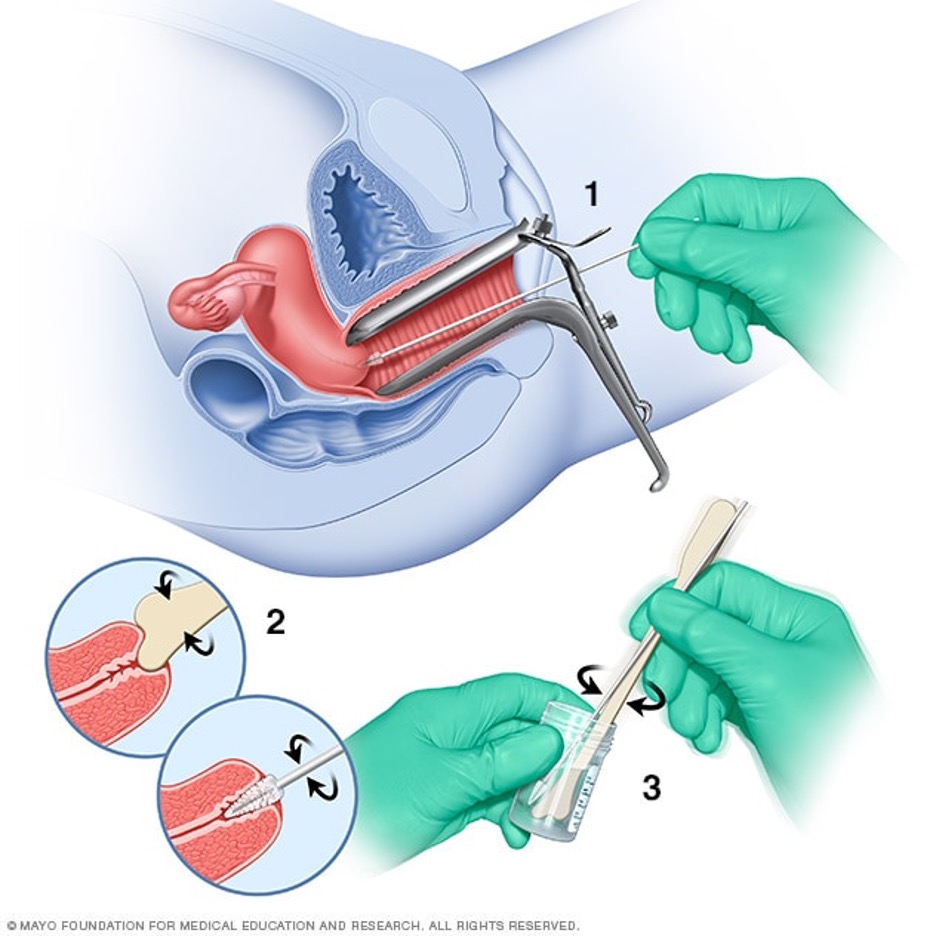
A Pap smear, also called cervical cytology, is done during a pelvic exam by your doctor. BUT it is important to note that just because you have gotten a pelvic exam, that does not mean you have had a Pap smear.
Pap smears collect and sample cells from your cervix, using a swab. The cervix is narrow lower end of the uterus that opens up into the vagina. The Pap smear test can detect abnormalities in the cells in your cervix, which could indicate cancer or pre-cancer. Cervical cancer starts as a growth of cells in the cervix, and Pap tests can find cervical cancer early, when it is most likely to be cured, as well as cells that are pre-cancerous, meaning they could become cancer in the future. If pre-cancerous cells are found, there are treatments that can help prevent the development of cancer.
When should I get Pap smears?
The good news is that unlike in the past, Pap smears do not need to be done every year; they can now be repeated every 3-5 years depending on your age, the type of test, and results of your previous {ap smears.
Currently in the U.S., the guidelines are for all women ages 21-29 years old to get screening every 3 years with the cervical cytology test. For women ages 30-65 years, the recommendation is for screening every 3-5 years – this depends on which test you get (cervical cytology, high-risk HPV testing, or both).
How can I get a pap smear?
In the United States, even if you do not have health insurance, there are state-run programs that you can use to get Pap smears for free. Other organizations, like Planned Parenthood, also do Pap smears for free.
We encourage everyone to review the resources that are available in their communities by talking to trusted people.
- Check up on health fairs and services at your local Gurdwara or Sikh community centers.
- Make a regular medical appointment with your healthcare provider if that is an option for you.
- Find out what state-run programs or community programs you have around you (such as Planned Parenthood).
- If you live around any colleges or medical schools, there might be a free medical clinic that provides basic services.
Start these conversations with your close female friends and family. Even though it may be hard, you can approach the topic by showing them this article, or the videos in Punjabi made by local health departments to educate our community about this topic. Together, we can reduce cervical cancer, the stigma, and death from this, in our community.
Video Links:
- Screening for Cervical Cancer: Pap Test (Punjabi)
- NHSGGC – Cervical Cancer Screening (Punjabi)
- Cervical screening saves lives: Punjabi
- Pap Test (Punjabi)
Sources:
- Oelke, N. D., & Vollman, A. R. (2007). “Inside and outside”: Sikh women’s perspectives on cervical cancer screening. The Canadian journal of nursing research. 39(1), 174–189.
- Andrae, B., Kemetli, L., Sparén, P., Silfverdal, L., Strander, B., Ryd, W., Dillner, J & Törnberg, S. (2008). Screening-preventable cervical cancer risks: evidence from a nationwide audit in Sweden. Journal of the National Cancer Institute, 100(9), 622-629.
- Nour, NM. (2009). Cervical cancer: a preventable death. Rev Obstet Gynecol. 2(4):240-4.
- Senapathy, J.G., Umadevi, P., Kannika, P.S. (2011). The present scenario of cervical cancer control and HPV epidemiology in India: an outline. Asian Pac J Cancer Prev. 12(5):1107-15.
- Bruni, L., Barrionuevo-Rosas, L., Albero, G., Aldea, M., Serrano, B., Valencia, S., et al. (2015). Human Papillomavirus and Related Diseases in India: Summary Report. Barcelona, Spain: ICO Information Centre on HPV and Cancer (HPV Information Centre).
- Sreedevi, A., Javed, R., & Dinesh, A. (2015). Epidemiology of cervical cancer with special focus on India. Int J Womens Health, 7, 405-414. doi: 10.2147/IJWH.S50001.
- Jemal, A., Bray, F., Center, M. M., Ferlay, J., Ward, E., & Forman, D. (2011). Global cancer statistics. CA: a cancer journal for clinicians, 61(2), 69-90.
- Torre, L. A., Bray, F., Siegel, R. L., Ferlay, J., Lortet‐Tieulent, J., & Jemal, A. (2015). Global cancer statistics, 2012. CA: a cancer journal for clinicians, 65(2), 87-108.



 Sikh Women's Health Initiative
Leave a comment